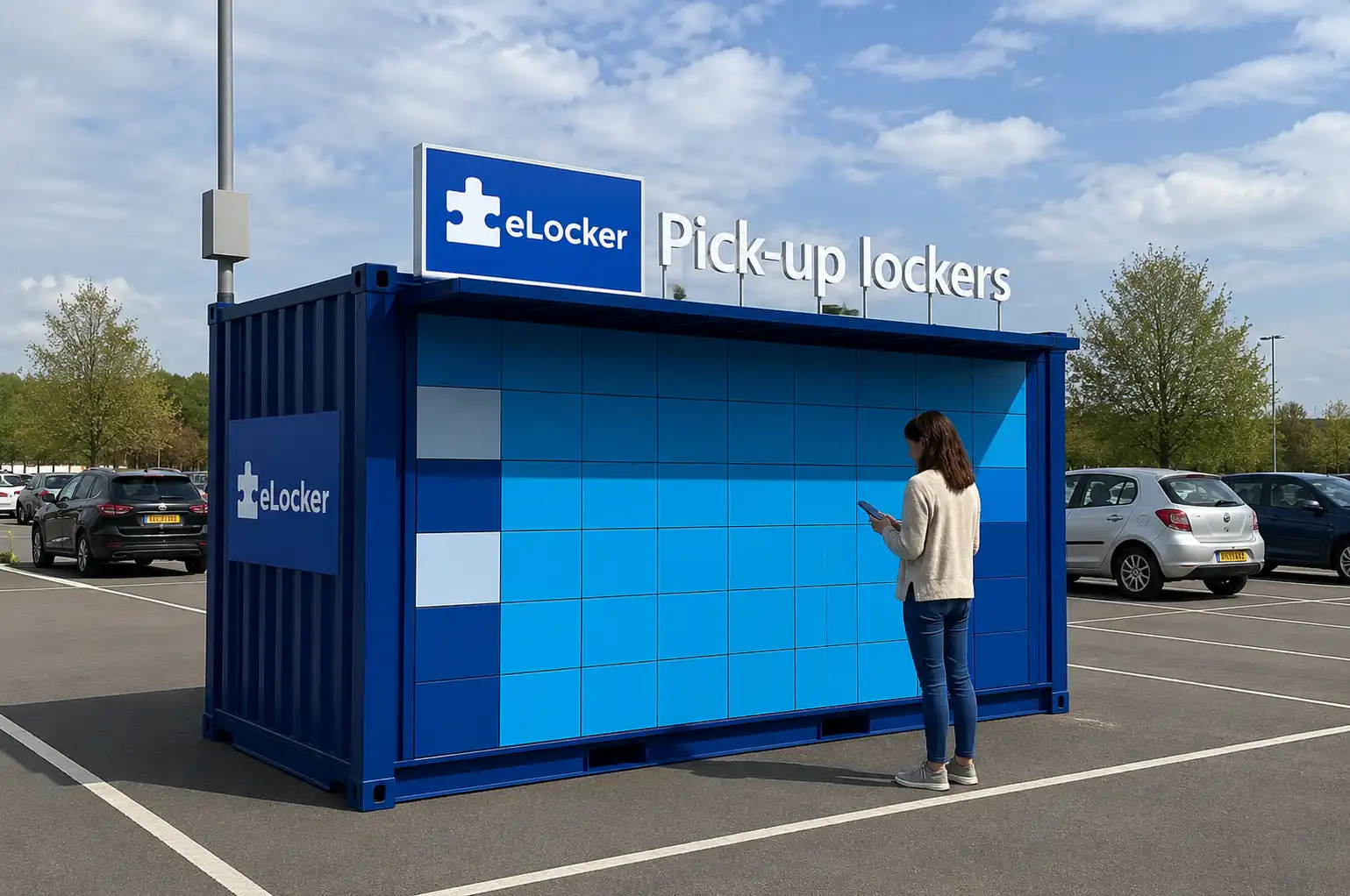
For the indoor installations that make up the bulk of locker projects, planning permission is rarely a factor. A bank of lockers inside a building is fitted equipment, not a new structure, so in most cases there is nothing to apply for. The question only becomes live when a unit stands outside, on its own, in the open, and even then the answer depends on a few specifics rather than a blanket rule. This article is general UK guidance, not legal advice, and the right people to confirm your own case are your local planning authority or a planning consultant.
Indoor smart lockers: equipment, not a building
When a bank of smart lockers sits inside a warehouse, an office, a store back room or a staff area, it is treated as fitted equipment within an existing building. It does not change the footprint of the building, and it does not alter how the land is used. In planning terms there is usually nothing to apply for. It is closer to installing shelving or a vending machine than to putting up a structure.
That holds whether the hardware is new or your existing lockers retrofitted with smart locks. The smart part of a smart locker is the software and access layer, not a change to the building; our explainer on what a smart locker is covers that.
Two exceptions are worth keeping in mind. A listed building has tighter controls on alterations, so a large fit-out inside one is worth checking. And any installation still has to respect the usual building, fire and accessibility rules, which sit separately from planning. But for a standard indoor bank, planning permission is not normally part of the conversation.
Freestanding outdoor units: where the question is real
The picture changes when a unit stands outdoors as a structure in its own right: a collection point in a car park, a locker bank at a site entrance, or a self-contained unit on a forecourt. Now it can count as a new structure or a change in how the land is used, and that is the territory planning rules are written for. Whether permission is needed depends on a handful of factors rather than a single yes or no.
Size and siting
Scale and position matter. A small, low unit tucked against an existing wall is viewed very differently from a large freestanding bank in an open forecourt. Permitted development rights, the rules that let some works go ahead without a full application, carry size and height limits and treat structures near a boundary more strictly. The bigger and more prominent the unit, the more likely it crosses a threshold that needs permission.
Your own land and curtilage
It generally helps if the unit sits on land you own or control, within the curtilage of the existing premises, rather than on a public footpath, a highway verge or shared land. Siting on land outside your control, or on the public realm, brings other consents and landowner agreements into play on top of planning. Where the unit goes is often as important as how big it is.
Click and collect facilities
There is a specific route worth knowing about. In England, permitted development rights allow a click and collect facility to be put up within the curtilage of a shop without a full planning application, subject to limits and to a prior approval step where the council can review siting, design and appearance. It is a real route, not a blanket exemption, and it applies to England rather than the whole of the UK. The Planning Portal is a good starting point, but confirm it with your local planning authority before you rely on it.
Conservation areas and listed buildings
Protected settings change the calculation. In a conservation area, near a listed building, or where the council has issued an Article 4 direction, permitted development rights are often reduced or removed and the bar is higher. A unit that would be straightforward on an ordinary industrial estate may need a full application in a sensitive location. If your site falls into any of these categories, treat permission as likely until your local planning authority tells you otherwise.
Advertisement consent for branding and signage
Signage is a separate question from the structure itself, and it is easy to overlook. If an outdoor unit carries branding, illuminated panels or advertising, that can need advertisement consent in its own right, even when the unit is fine on planning grounds. As a rough guide, larger signs and any illuminated sign are the ones most likely to need consent. It is worth raising the signage at the same time as the unit so the two are considered together.
“Indoors, planning permission is rarely the issue. It is the freestanding outdoor units where it actually matters, and even then the answer turns on the size, the siting and the location. My advice is always the same: have a quick word with the local planning authority early, before you commit to anything.”Bijoux M’Bayo, Retail collections & returns at eLocker · LinkedIn
A sensible way to approach it
None of this needs to slow a project down. Most installations are indoors, so the answer is usually quick. Where an outdoor unit is on the table, a short conversation early on saves trouble later. A practical order of play:
- Confirm indoor or outdoor. Indoor banks rarely raise a planning question, so settle this first.
- Check the location. Note whether the site is a conservation area, near a listed building, or under an Article 4 direction, as these change the answer.
- Look at size and siting. A small unit on your own land against an existing wall is the easiest case; a large freestanding bank in the open is the one to check.
- Raise signage early. If the unit will carry branding, ask about advertisement consent at the same time.
- Speak to the experts. Your local planning authority can give an informal view, and a planning consultant can confirm it. This is the step that turns general guidance into a decision you can act on.
The weather side of an outdoor unit is a separate engineering matter, not a planning one. If that is on your mind, our note on whether smart lockers are waterproof covers how outdoor units are built to cope.
How eLocker helps
We have put lockers into a wide range of UK sites, indoor and outdoor, so the planning question is familiar ground. We will tell you when an installation looks straightforward, which most indoor ones are, and flag early when an outdoor unit needs a closer look. We cannot give you a planning decision, and we will not pretend to. What we can do is help you scope the unit sensibly, point to the factors above, and support the case you take to your local planning authority, so you get a clean install with no surprises in a workflow built for automated collections and returns.
Frequently asked questions
Do indoor smart lockers need planning permission?
In most cases, no. An indoor bank is treated as equipment inside an existing building, so there is usually nothing to apply for. A listed building is the main exception to check, and normal building, fire and accessibility rules still apply.
When might an outdoor smart locker need planning permission?
When it stands as a freestanding structure outdoors, its size, siting and location decide the answer. A small unit on your own land against an existing wall is the easiest case. A large unit in the open, or one in a conservation area or near a listed building, is the most likely to need permission. Confirm your own case with the local planning authority.
Do I need consent for branding on an outdoor unit?
Possibly. Signage is assessed separately from the structure, and larger or illuminated signs can need advertisement consent even when the unit itself is fine on planning grounds. It is best to raise the signage with your local planning authority alongside the unit.
Who should I ask to be sure?
Your local planning authority can give a view on your specific site, and a planning consultant can confirm it before you commit. The government guidance on when you need planning permission is a useful background read. This article is general UK guidance rather than legal advice, so treat those two as the people who settle it.
