
"Waterproof" is the word people reach for, but it is rarely the right one. A genuinely waterproof item can be held under water. A locker that lives outside does not need to survive a dunk; it needs to shrug off rain, spray and dust over years of use. So the precise answer is that a good outdoor smart locker is weather-resistant, tested to a recognised standard, while an indoor unit is built for a dry environment and left at that. The mistake is buying an indoor cabinet for an exposed outdoor site, or paying for a sealed outdoor unit to sit in a warm office.
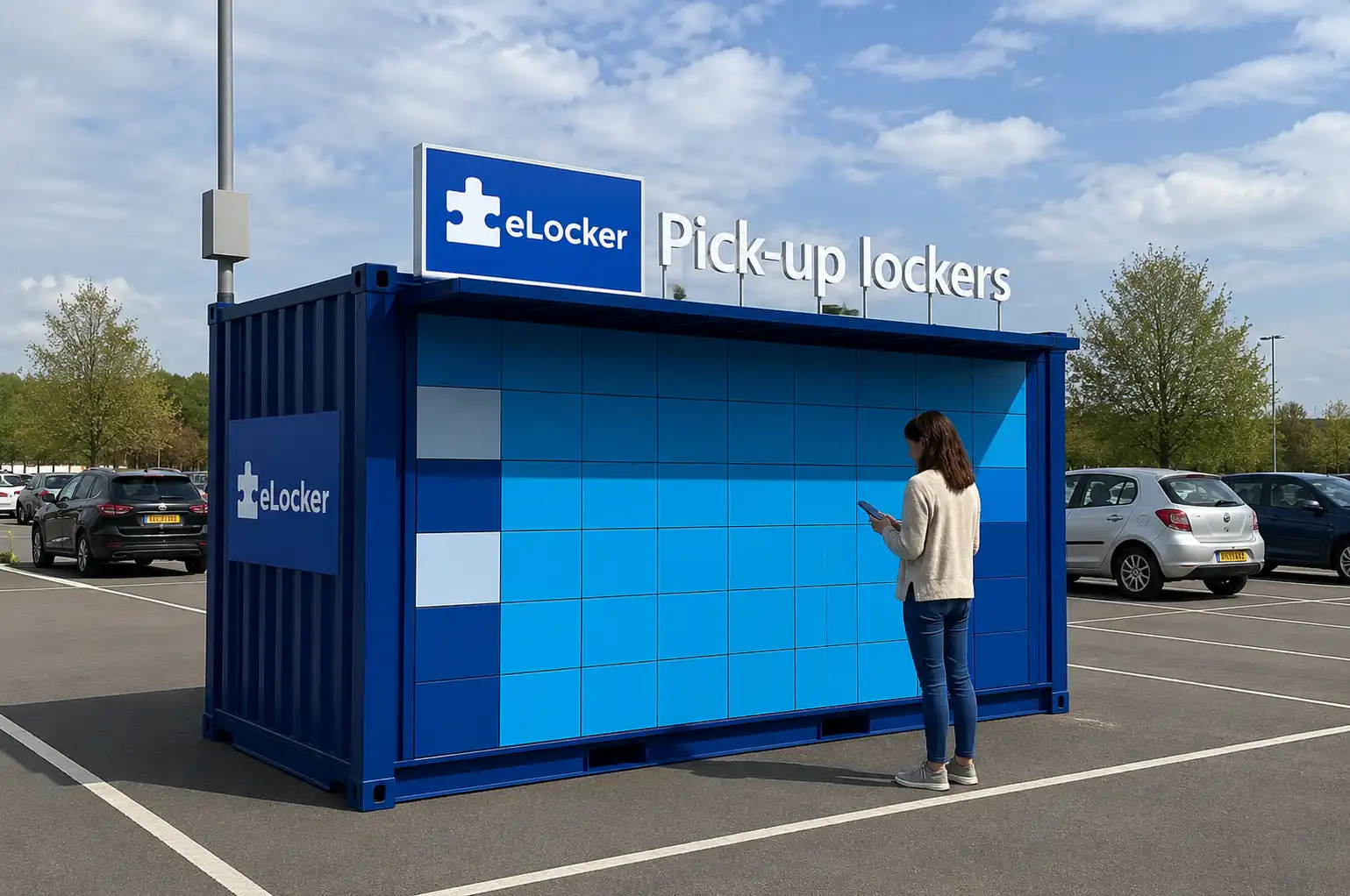
Indoor smart lockers: dry by design
Most smart lockers live indoors, in a warehouse, an office, a store back room or a leisure centre. They are built for that. The steel, the electronics and the locks are specified for a dry, climate-controlled space, not for standing rain. There is no benefit in paying for a sealed, weather-rated enclosure that will never see weather. So if your lockers are going inside, "waterproof" is not a useful question. "Sturdy, secure and well made" is.
Outdoor smart lockers: weather-resistant to an IP rating
Once a locker goes outside, the question changes. Now it has to handle rain driven sideways, dust, and the odd hose-down during cleaning. The proper way to describe and compare that protection is the IP rating, short for Ingress Protection, set out in the international standard IEC 60529. It replaces vague words like "waterproof" with a two-digit code you can actually check. The rating should not just appear on the spec sheet: a good outdoor unit is tested to the standard, and a supplier should be able to show the tested rating for the enclosure when asked.
How to read an IP rating
An IP rating looks like IP54 or IP66. The two digits each mean something specific:
- The first digit is dust and solids, on a scale of 0 to 6. A 5 means dust-protected, so dust can get in but not enough to interfere with the locker. A 6 means dust-tight, with no ingress at all.
- The second digit is water, on a scale of 0 to 9. A 4 means protected against splashing from any direction. A 5 means protected against low-pressure water jets. A 6 means protected against powerful high-pressure jets.
Here is the key point for the word "waterproof": none of those water levels mean submersible. Submersion only starts at a second digit of 7, for brief immersion, or 8, for continuous immersion, and an outdoor locker has no reason to be built for either. So IP54, IP55, IP65 and IP66 all describe a unit that handles rain and jets well. They do not describe something you can put under water, which is exactly why "weather-resistant to IPxx" is the more honest phrase than "waterproof".
What a sensible outdoor rating looks like
For a locker standing outside, you want both digits doing real work: a high dust figure and a water figure that copes with driving rain and cleaning. A rating in the IP54 to IP66 range covers the great majority of outdoor sites, with the higher numbers suited to harsher, more exposed spots. There is no single "correct" rating; it depends on how sheltered the location is. The right move is to tell the supplier exactly where the unit will stand, fully exposed, under a canopy, in a loading bay that gets pressure-washed, and let the rating match the spot.
“Once you tell me where the unit actually stands, the right IP rating tends to pick itself. The honest word is weather-resistant: a good outdoor locker shrugs off driving rain and a hose-down, but it was never meant to go under water.”Billy Whiffen, Operations Director at eLocker · LinkedIn
The design features behind the rating
A weather rating is not one feature; it is the result of several working together. In a well-built outdoor unit you will usually find:
- Sealed electronics and locks, so the parts that matter stay dry while the body takes the weather.
- Gaskets and seals around the doors, which keep driven rain out of the compartments.
- Drainage, so any water that does get to the surface runs away rather than pooling.
- A canopy or rain hood, which sheds water off the top and shields the access point.
- Powder-coated steel, which resists corrosion so the unit stays sound through years of damp.
None of this makes a locker waterproof in the submersible sense. It makes it weather-resistant, which is what an outdoor unit actually needs.
Weather is only half the question. Ask about rust too.
An IP rating says how well a unit keeps water and dust out. It says nothing about corrosion, and outdoors, rust is the slower threat but the surer one. So alongside the rating, ask about the finish. A good powder coat, properly applied over a well-prepared surface, protects the steel against rust for years and is the standard finish on a quality outdoor unit. The catch-all is galvanised steel, where the steel is zinc-coated before the finish goes on. It costs more, but it lasts longer, and for the harshest spots, coastal sites, standing spray, anywhere salt is in the air or on the ground, it is usually money well spent.
Match the rating to the place
Decide where the locker will live first, then choose the build to suit. Indoors, you do not need a weather rating at all, so do not pay for one. Outdoors, settle the exact spot and how exposed it is, then pick an IP rating that comfortably covers it. If the unit is heading outside, weatherproofing is only one of the questions worth asking; siting, ground works and consents matter too. We cover those in our note on whether smart lockers need planning permission.
How eLocker approaches it
We treat the locker as a means to an end, and the end is automated collections and returns with a full audit trail behind every deposit and collection. The hardware is specified for the site: a straightforward, well-made cabinet for indoor use, and a weather-resistant build rated to a suitable IP standard for outdoor use. Either way, the software and the audit trail are the same. If you are not sure which build a given location needs, tell us where it will go and we will specify it properly rather than over-engineer it. For the foundations, our explainer on what a smart locker is is a good place to start.
